Why the Horizon Matters in a Western
Why the horizon matters in a Western: learn to read distance, framing, and a character’s place in the landscape as a scene’s meaning shifts.
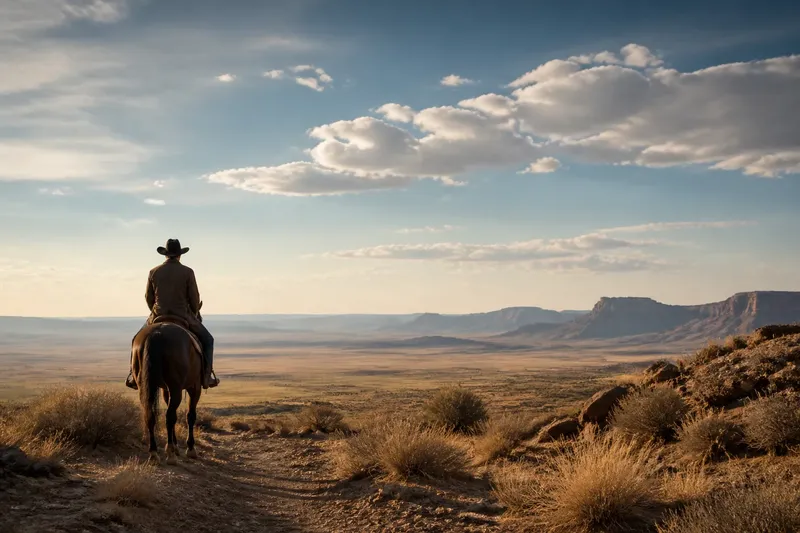
A horizon can make a Western character look free, exposed, or unable to leave. In a Western, the line where land meets sky is more than a scenic backdrop: its position in the frame helps you read how a character relates to the place around them. Watch where the horizon sits, what blocks it, and whether the character moves toward it or away.
There is no single “right” horizon for a scene. A low horizon gives the sky more room; a high one presses the landscape into view. A broken horizon can make open country feel less welcoming than it first appears. These choices offer distinct ways to frame a character, and each suits a different kind of moment. You can follow the effect without knowing the camera equipment or the location.
What does a low horizon make you notice?
When the horizon sits low in the frame, a large stretch of sky opens above the character. That sky may suggest possibility, but it can also make a lone figure seem small. The distinction comes from how the scene uses the space: an unhurried ride toward the distance can feel like a choice, while a solitary figure with nowhere to hide may seem exposed beneath the same broad sky.
Look at the character’s direction and pace. If they travel steadily toward a visible gap or distant landmark, the open upper frame can lend the movement a sense of purpose. If they pause or scan the empty country, the same openness can emphasize how little cover or company they have. The frame does not decide the feeling by itself; action gives the empty space its meaning.
This approach suits scenes about departure, arrival, or a character testing whether a place will let them pass. It also invites a useful question: does the horizon seem like somewhere to go, or simply a boundary the character cannot reach? A distant line can remain visually close to the edge of the world while never seeming attainable. That tension makes freedom feel possible without making it certain.
How does a high horizon make the land feel close?
A high horizon gives more of the frame to ground, slopes, scrub, tracks, or ridges. The land becomes a stronger presence, not just the route beneath someone’s boots. If a character crosses uneven terrain, the frame can make each rise and hollow feel like part of their immediate problem. The sky no longer offers as much visual breathing room.
Watch whether the ground creates a route or interrupts one. A clear track can guide the eye across the frame, giving the character a visible way through. A ridge that cuts across the land can divide the view and conceal what lies beyond. In either case, the viewer has to read the terrain alongside the character, rather than looking past it to an open distance.
A high horizon often suits a scene in which a character is hemmed in by the physical shape of a place, even if no wall or fence appears. It can also make a familiar route feel uncertain if the land rises, folds, or hides the next stretch. Think of the frame as a tabletop: objects placed close together seem to constrain how your hand can move. Here, the visible contours do something similar to the character’s apparent choices.
What changes when the horizon is broken?
A ridge, mesa, tree line, or distant mountain can interrupt the horizon. Instead of a clean division between earth and sky, you see an irregular edge that divides the view into layers. That break can provide shelter, suggest an obstacle, or hide what the character is moving toward. Its meaning depends on where it falls in relation to the character and the direction of travel.
Notice whether the character stands in front of the break, beside it, or beyond it. A figure silhouetted against a ridge may look starkly exposed, while one partly hidden by a rise can seem momentarily sheltered. If the character moves toward the obstruction, it may feel like a barrier. If they move alongside it, the same landform can appear to offer a route or cover.
This approach suits scenes in which the landscape changes the character’s sense of what is possible. It is especially useful to track the moment an open view becomes a divided one: a new ridge enters the frame, a character passes behind it, or a distant shape disappears. The loss of sight matters. Once the character is hidden, you may begin to share their uncertainty about what lies ahead.
How can you follow the horizon through a scene?
Read the horizon as a changing relationship, not a fixed symbol. A scene may begin with a low line and open sky, then shift to a high line as the character reaches rougher ground. The landscape’s meaning can change along with it. Follow the character’s movement, the camera’s framing, and the visible path together; each gives you a different clue about whether the character appears free, exposed, or caught between places.
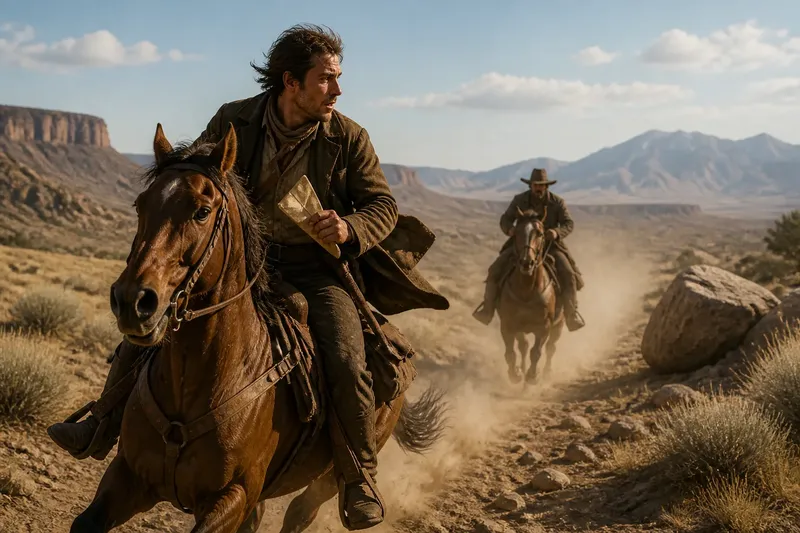
Say a character rides away from a settlement across open land. At first, the horizon sits low and the route appears unobstructed, so the departure can seem deliberate. Then the rider reaches a broad rise that fills more of the frame and hides the settlement behind it. The expected effect is a change from open departure to a more uncertain passage: the character has left one place, but the next is not yet visible.
- Find the horizon. Notice whether it is low, high, or interrupted, and what occupies the largest part of the frame.
- Locate the character. Ask whether they are centered, near an edge, or dwarfed by the open space.
- Trace the route. Look for a track, a gap between ridges, or a line of travel that points toward or away from the horizon.
- Watch for changes. Note when the character or camera crosses a rise, loses sight of a place, or gains a new view.
- Compare appearance with action. A broad sky may look liberating, but a still, watchful character can make it feel exposing instead.
This sequence suits close scene-reading: it keeps attention on what is visible and avoids treating every wide landscape as a symbol of freedom. If the picture stays almost unchanged while the character’s behavior shifts, that contrast can be meaningful too. A person may remain physically exposed while deciding, refusing, or waiting; the horizon frames the moment without explaining it for them.
Which horizon approach fits the scene you are watching?
Does a low horizon always mean freedom?
No. It gives the sky more space, but a lone or motionless character can look vulnerable beneath it. Read the figure’s behavior and direction before settling on the mood.
What should I watch when a ridge hides the distance?
Notice when the ridge blocks the character’s view and whether the route continues beside, over, or behind it. The interruption can make the next part of the journey feel uncertain without showing what happens there.
Why does the horizon seem to move between shots?
The camera may change position, framing, or angle, or the character may have entered different terrain. Compare what remains in view and what disappears; that change can mark a shift in how the character occupies the landscape.
How do I choose between these readings?
Start with the frame’s dominant feature: open sky, visible ground, or an interrupted distance. Then check the character’s movement and what the scene lets them see. The reading that accounts for both the framing and the action is usually the more useful one.
Why does the horizon keep its meaning open?
A Western horizon can frame a choice without telling you how to judge it. Open country may offer room to leave, but distance can also make a person vulnerable; a ridge may obstruct sight yet provide cover. That is why the same landscape can support different feelings within one scene, or even within a single shot.
When you watch for the horizon in a Western, track what the frame reveals and withholds. Ask whether the character can see a destination, whether the land offers a route, and what happens when that view changes. Those details turn distant scenery into a readable part of the scene: not an answer, but a clear indication of how the character stands between where they have been and where they might go.