Showdown or Long Pursuit: Two Ways to Build Tension
Showdown or long pursuit: learn how each Western structure shapes suspense, controls the viewer’s expectations, and gives a scene a satisfying turning point.
A Western showdown or long pursuit creates tension in opposite ways: one compresses danger into a charged meeting, while the other keeps changing what danger means. If you are shaping a scene, decide first what you want viewers to anticipate, then choose the form that can keep that expectation alive.
What should the audience expect?
Begin with the question hanging over the scene. In a showdown, the audience expects a decision or confrontation: Will the two characters face each other, and what will one do when they do? In a pursuit, the question keeps shifting: Can the pursuer catch up, where will the quarry go, and what will happen if the route closes?
Write that question in plain language before arranging the action. Keep it specific enough to guide the scene. “Will the rancher reach the station before the armed rider?” gives a pursuit a clear direction. “Will the sheriff draw on the man he once protected?” points toward a showdown with personal stakes.
This choice is not just about how much movement appears on screen. A pursuit can carry a moral conflict, and a standoff can involve physical movement as characters circle, retreat, or reach for cover. The form comes from how suspense is organized: around one concentrated encounter or across a chain of changing obstacles.
When does a showdown fit?
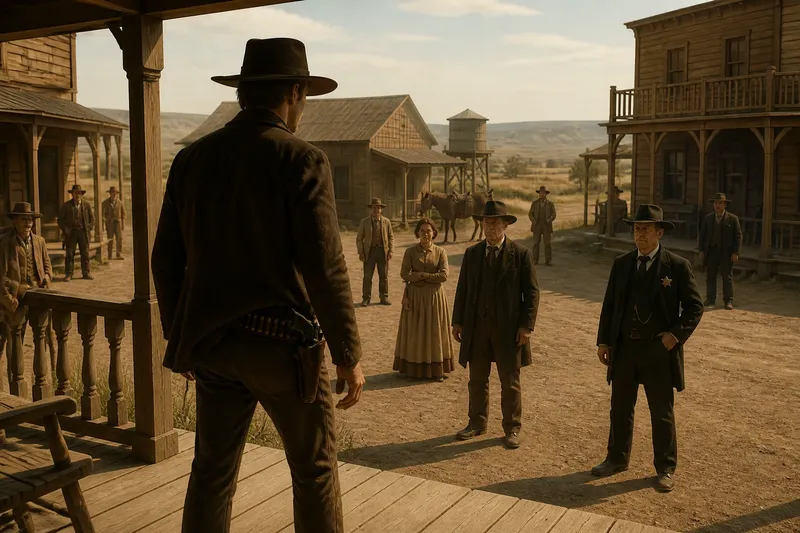
Choose a showdown when the scene’s strongest material lies in the people who must meet. It works well when their history, conflicting loyalties, or incompatible goals can make a pause feel active. The characters may be still, but the audience is weighing each glance, delay, and shift in position.
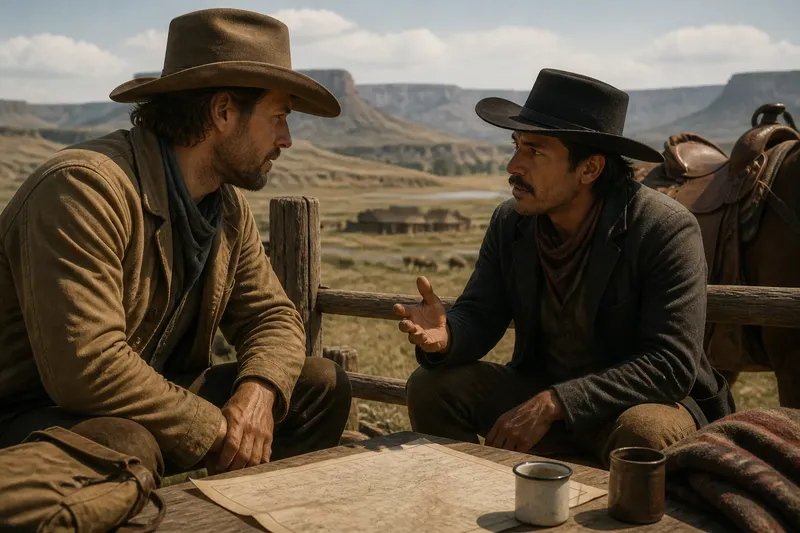
Give the meeting a reason neither character can easily avoid. A public accusation, a contested claim, or a promise that must be answered can bring them to the same place without making their arrival feel convenient. Then clarify what each person wants from the encounter. One may want an apology; the other may want to leave without appearing afraid.
Build the suspense through limited, meaningful changes. A character can notice that an ally has stepped away, realize that the other person has a clear path to the door, or see a hand move toward a coat. Each detail should alter what the audience thinks may happen. If a pause adds no new uncertainty, it is probably only a pause.
Think of a showdown like a door held almost shut: the pressure comes from knowing it could open, and from not knowing who will move first. Keep the scene focused enough that a small gesture can carry weight. Too many unrelated interruptions can dilute the audience’s attention and make the confrontation feel less consequential.
When does a pursuit fit?
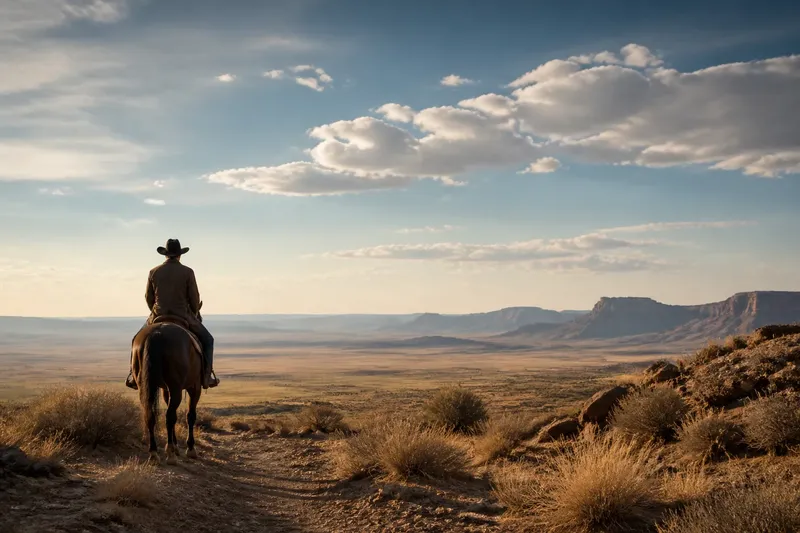
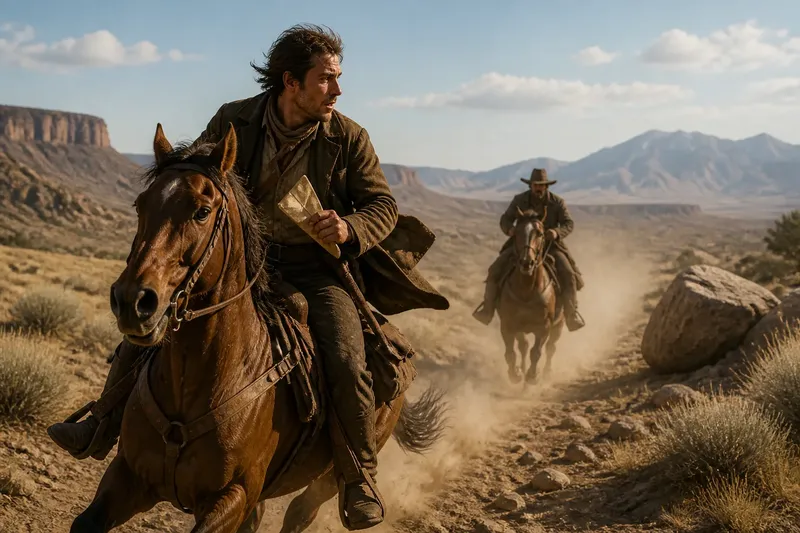
Choose a pursuit when suspense depends on changing conditions. The chase can cross open ground, a narrow track, a crowded street, or a river crossing, but each new stretch should affect the pursuer’s options. A route that looks promising can become blocked; a shortcut can cost time; a moment of apparent escape can reveal a new problem.
Map the pursuit as a sequence of reversals rather than a sequence of locations. At each turn, ask what has changed: distance, visibility, available routes, the pursuer’s knowledge, or the quarry’s willingness to keep running. If the answer stays the same from beat to beat, the scene may be moving without developing.
Keep the audience oriented. Viewers should understand who is chasing whom, what each person is trying to reach, and why the next obstacle matters. You do not need to explain every turn in dialogue. A clear landmark, a visible blocked path, or a character’s reaction can make the geography legible while the action continues.
Let the pace vary. A pursuit that never pauses can become monotonous, even if the scenery changes. A brief delay—a hidden track, a lost view of the quarry, or a choice between two routes—gives viewers time to revise their expectations before the next burst of movement.
How do you shape the audience’s expectations?
How can a showdown stay tense before anyone moves?
Make the audience aware of a choice, then let the characters approach it at different speeds. One person might speak plainly while the other avoids answering, so even a quiet exchange changes the balance of the meeting.
How do you keep a pursuit from feeling repetitive?
Give each obstacle a different consequence. A blocked path might cost the pursuer a route, while a sudden turn might expose the quarry’s destination and change what catching up would mean.
Can a pursuit end in a showdown?
Yes, if the chase narrows the choices until the characters have a reason to face each other. Let the transition come from the action: the route ends, an escape becomes impossible, or one character chooses to stop rather than continue running.
How do you avoid making the outcome feel obvious?
Show what each character can plausibly do, but withhold certainty about which option they will choose. An expectation can be strong without being a prediction the scene must fulfill.
How can you test the structure on the page?
Once you have chosen a form, sketch the scene in beats before writing polished dialogue. For a showdown, track how the balance of the encounter changes. For a pursuit, track how the route and the chance of escape change. This simple outline helps reveal whether the scene is building pressure or merely extending its duration.
Say you are writing an invented Western scene in which a courier carries a letter that could expose a land grab. You want the audience to wonder whether the courier will deliver it before the rancher’s agent catches up. A pursuit gives you room to change the courier’s choices: a familiar trail becomes unsafe, a covered wagon offers concealment but slows the ride, and a fork in the road forces a decision. The expected result is a sequence in which each choice changes the audience’s sense of whether delivery is still possible. If the story instead turns on whether the agent will admit that he knows the courier, a face-to-face showdown may hold the sharper question.
Read the beats in order and ask whether each one changes the audience’s expectation. If the answer is no, revise the beat, combine it with another, or remove it. Then check the ending: it should answer the central question in a way that follows from the characters’ choices, even if the result surprises the viewer.
What should the ending resolve?
A showdown earns its ending by resolving the confrontation’s central choice. That does not require a gunshot. A character might lower a weapon, refuse a demand, or walk away at a cost. Whatever happens, make the final action reveal something the encounter has put under pressure.
A pursuit earns its ending by changing the conditions that kept it moving. The quarry may escape, the pursuer may catch up, or both may discover that the chase has led them somewhere neither intended to go. The outcome should settle the immediate question while leaving the consequences of the characters’ decisions clear.
You can also let one form hand off to the other. A chase may deliver two rivals to a meeting neither planned; a standoff may break when one person runs. Keep the transition tied to a changed choice, not simply a desire to add action. The best structure is the one that keeps the viewer asking a new, sharper question as the scene unfolds.
When choosing between a Western showdown or long pursuit, start with the audience’s question and follow it through every beat. If suspense depends on what two people will do in the same place, concentrate the scene. If it depends on how a moving situation keeps changing, give the characters a route that can turn against them. Either way, make every delay, gesture, and reversal alter what the viewer expects next.