The Sidekick Is More Than a Second Saddle
A Western sidekick can challenge the hero’s choices and reshape the journey. See how to give a companion a distinct frontier view and real influence.
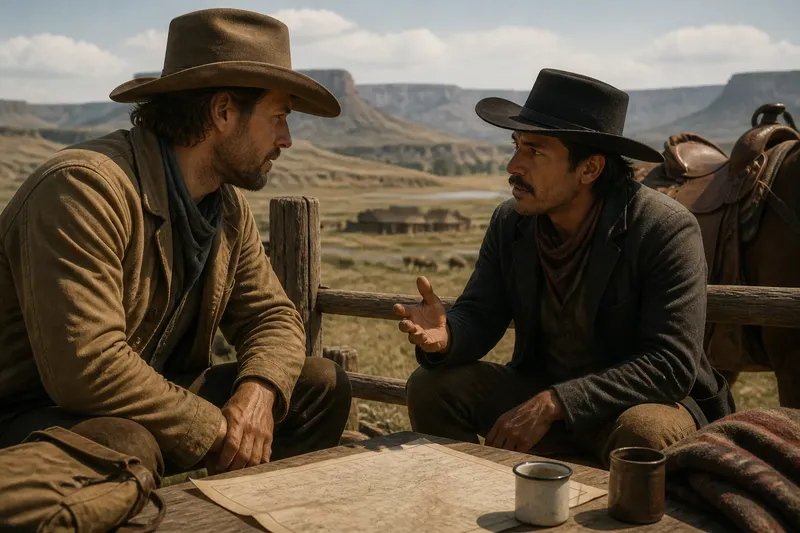
A Western sidekick becomes memorable when the hero cannot simply ignore them. In a strong Western sidekick, a companion’s advice, refusal, or competing goal changes what the journey means—not just who rides beside the lead.
That sounds simple, but familiar character habits can flatten the role. The companion agrees too readily, exists only for comic relief, or delivers a different opinion that never affects the story. Here are the common problems, why they happen, and what to try instead.
Why does the companion always agree with the hero?
Writers often make the sidekick agreeable to keep the hero’s decisions moving. But if every warning ends in a nod, the pair’s relationship has no pressure, and the audience learns little about either person.
Give the companion a principle that matters in the current situation. Perhaps the hero wants to drive a family off land to satisfy a contract, while the companion believes the agreement is unjust. The companion need not be morally flawless; their position simply needs a reason the hero can understand.
Then let disagreement have a cost. The companion might refuse to scout a route, insist on speaking with the family, or leave the party temporarily. The hero must respond, and the choice exposes what they value. Conflict works best when it grows from a genuine difference, not a sudden argument inserted to make a scene livelier.
Why does the sidekick’s advice change nothing?
A companion can voice the wisest thought in the film and still feel decorative if the hero proceeds exactly as planned. This often happens when dialogue is mistaken for influence: the sidekick gets a line, but not a share in the story’s decisions.
Try linking the companion’s view to an observable consequence. If they know a local custom the hero has dismissed, let following that custom open a conversation the hero’s threat would have closed. If they warn that a hired guide has a separate interest, let the hero’s response shape whether the group keeps traveling together.
Imagine a rancher plans to cross a settlement’s shared pasture without asking. His companion objects, explaining that the residents depend on that route too. If he pauses and negotiates, the journey changes direction and the companion’s judgment carries weight; if he refuses, the refusal reveals a harder edge in his character. Either outcome makes the disagreement part of the plot.
How can a companion show a different frontier?
The frontier should not look identical to everyone in the party. A hero might see open country as a chance to escape, while a companion sees a place where people already live, work, and hold obligations. If the sidekick’s view amounts only to “the hero is wrong,” it can feel like a lecture rather than a character.
Make the difference concrete through attention and priorities. The companion might recognize a trail as a route used by seasonal workers, notice that a town’s water source is shared, or ask whose claim a map leaves out. These details can alter the hero’s understanding without turning the companion into a walking history lesson.
Keep the companion’s own stake visible. Perhaps they want to return to a settled life, protect someone in the group, or avoid becoming indebted to a powerful landholder. A distinct perspective is more convincing when it grows from something the character hopes to preserve or fears losing.
Why does the companion feel like comic relief?
Humor can make a traveling pair feel close, but a sidekick who exists only to puncture tension becomes a release valve rather than a person. The usual cause is a mismatch between the companion’s jokes and their actual choices: they sound witty, yet their desires never affect the journey.
Give the humor a point of view. A companion may joke about the hero’s grand plans because they have seen those plans leave others with the cleanup. Another may use teasing to hide fear, then stop joking when a vulnerable person is at risk. The shift gives the audience information without requiring a speech.
Also let the companion be competent in a way the hero is not. They might read a room, bargain patiently, or know when to stop pressing a frightened witness. The skill need not involve gunplay. When the situation turns serious, the companion’s ability should still matter.
What should you check when a Western sidekick feels flat?
Does the companion want something beyond staying with the hero?
Give them an aim that could survive the hero’s departure, such as returning to a community or settling an obligation. That aim helps explain why they choose to travel and what might make them leave.
Can the companion disagree without becoming a villain?
Let both characters have understandable reasons, and show the practical stakes behind the dispute. A disagreement about whom to trust can create tension without making either person foolish or cruel.
Does the companion’s view change an actual decision?
Look for a choice that would differ if the companion were absent. If the answer is none, give the companion a meaningful refusal, suggestion, or alternative plan and let the hero react to it.
Does the companion change, too?
A sidekick should not merely reform the hero while remaining untouched. Their own beliefs may harden, soften, or become more complicated as the journey tests them.
How do you keep the relationship from feeling one-sided?
The hero can hold the title role without holding every useful quality. Let each character help at different moments and carry different kinds of risk. The hero may know how to face an armed threat; the companion may know when force would create a lasting enemy. This balance resembles a pair of reins: both matter, even if one hand leads at a particular turn.
Be careful not to make the companion’s best ideas disappear once the crisis passes. If the hero accepts advice, show the changed behavior afterward. If the hero rejects it, allow the relationship to bear that choice. A private silence, a change in how they divide responsibilities, or a companion’s decision to travel separately can carry the consequence without a long explanation.
When should the companion part ways with the hero?
A departure can be powerful when the companion’s goal and the hero’s conduct have pulled too far apart. It feels arbitrary if it arrives only to create a dramatic pause, then gets undone without a change in either character.
Before writing a split, identify what each person believes cannot be compromised. The companion may refuse to help intimidate a town; the hero may insist the threat is necessary. If they part, give the separation a practical shape: one continues the original journey, while the other stays to protect someone or pursue a different lead.
A reunion, if it comes, should meet the old disagreement rather than erase it. The companion’s influence does not depend on winning every argument. It depends on making the hero’s choices—and the road ahead—mean something different. For a Western sidekick, that is the difference between sharing a saddle and helping decide where the journey goes.